

Crossword Aims to Cross 400 stores by 2030
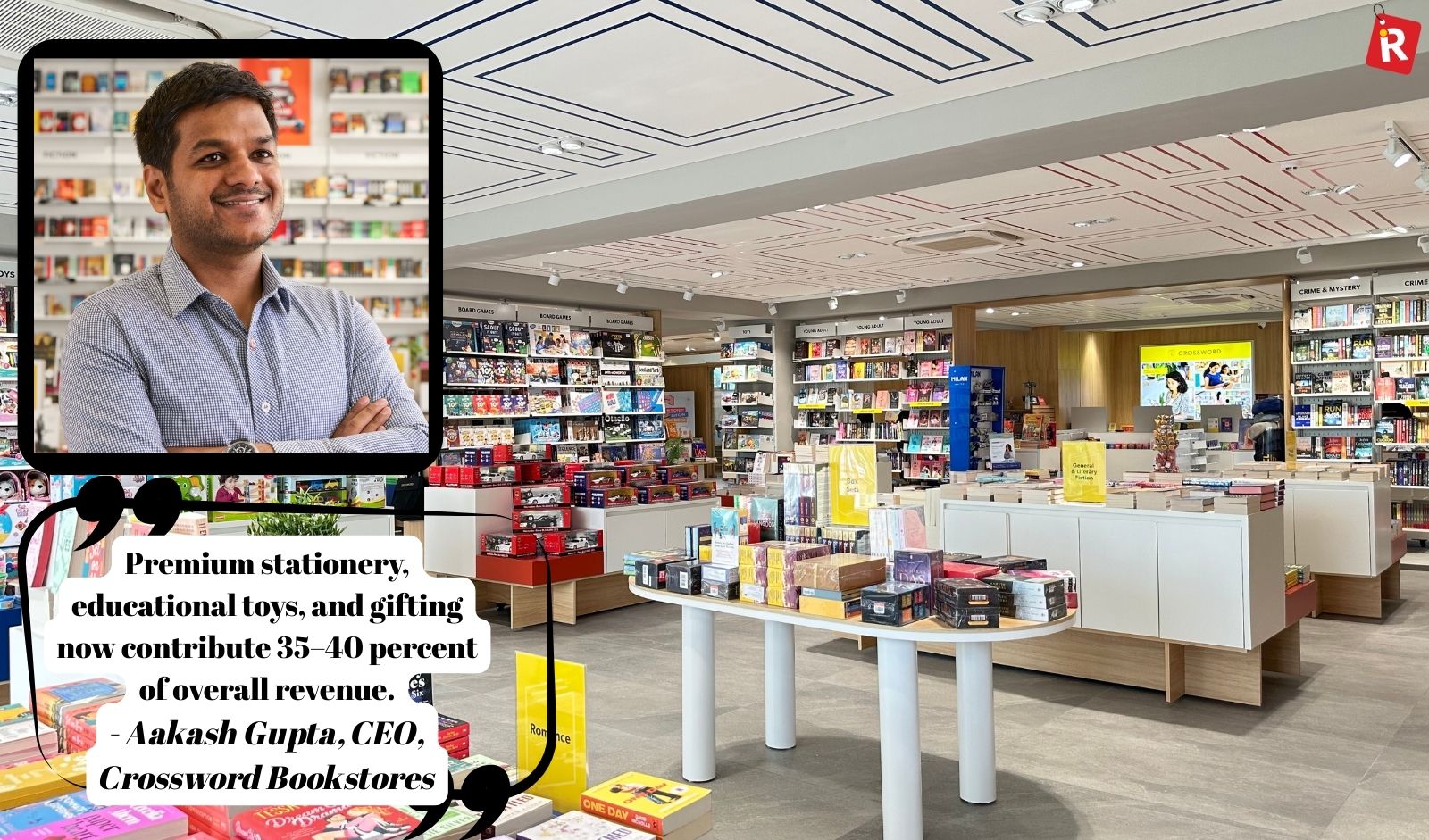
With over 130 stores across more than 46 cities, Crossword is now India’s largest bookstore chain.
By Vaishnavi Gupta, Associate Editor
Dec 15, 2025 / 9 MIN READ


At a time when physical retail is constantly being questioned, Crossword Bookstores is scripting a quiet but confident comeback. Once synonymous with the joy of discovering books in bustling malls and high streets, the iconic bookstore chain has spent the past few years redefining itself—returning to its roots while embracing the demands of a modern, scalable retail business.
“We took a conscious decision to bring Crossword back to its core as a book-first retailer,” said Aakash Gupta, CEO of Crossword Bookstores. “That clarity helped us rebuild profitability, sharpen our identity, and prepare for our next phase of expansion.”
A Books-First Reset That Paid Off
The turnaround at Crossword has been driven by a renewed focus on what readers truly value. Moving away from over-diversification, the brand placed books firmly at the center of its strategy—strengthening curation, improving store layouts, and elevating the in-store experience.
“Our performance today is anchored in two very clear factors,” Gupta explained. “The first is our books-first approach, which has helped us improve everything from selection to store execution. The second is the revival of community-led initiatives like the Crossword Book Awards, which have reconnected us deeply with readers.”
These efforts have translated into tangible results. Crossword reported annual revenue of approximately Rs 300 crore—a significant jump from previous years—and has achieved sustained profitability. More importantly, the brand has reclaimed its position as a trusted cultural destination for readers across age groups.
Franchise-Led Expansion Fuels the Next Phase
With over 130 stores across more than 46 cities, Crossword is now India’s largest bookstore chain. But this is only the beginning. The company has set an ambitious target of crossing 400 stores by 2030.
“Our growth strategy is deliberately balanced,” stated Gupta. “We will continue to invest in large flagship stores in key metros, while rapidly expanding into Tier II and Tier III cities where demand for high-quality bookstores is strong and underserved.”
A key driver of this expansion will be Crossword’s revived franchise-led model. After restarting the franchise programme, the company has seen encouraging interest from local entrepreneurs who bring strong market knowledge and community connections.
“We are inviting committed partners who understand their cities deeply,” Gupta added. “With Crossword’s brand equity, centralized inventory systems, and curated assortments supporting them, franchisees can scale efficiently while maintaining consistency. This model will play a crucial role in helping us reach 400 stores.”
Tier II and III Cities: The Heart of Growth
If metros provide scale, smaller cities offer something equally valuable—emotional connection. Crossword’s leadership believes Tier II and III markets are central to the future of physical bookstores in India.
“What we see in these cities is a genuine hunger for curated physical retail,” he noted. “Customers don’t just shop—they engage. Our stores quickly become community and cultural hubs.”
Unlike metros, where consumers are spoilt for choice, smaller cities show exceptional loyalty and sustained engagement. Events, author interactions, and even simple browsing experiences often draw repeat footfalls, making these locations some of Crossword’s most promising growth drivers.
Omnichannel, Not Online-Only
While physical stores remain at the heart of Crossword’s business, digital channels are playing an increasingly complementary role. The brand is strengthening its omnichannel strategy by upgrading its website, integrating with quick-commerce platforms, and improving fulfilment speed.
“Online is not a competitor to our stores—it’s an enabler,” highlighted Gupta. “Our digital presence acts as a discovery engine and ensures convenience, while our physical stores deliver immersion and experience.”
Customers can browse in-store, receive personalized recommendations, attend author events, and still rely on online channels to quickly source books not available on the shelf. This seamless movement between discovery and transaction defines Crossword’s omnichannel vision.
Beyond Books: A Curated Lifestyle Experience
Books may be the soul of Crossword, but adjacent categories are increasingly powering growth. Premium stationery, educational toys, and gifting now contribute 35–40 percent of overall revenue.
“These categories significantly enhance the lifestyle feel of our stores,” he noted. “We’ve focused on premium and exclusive products, including leading international stationery and gift brands, which align with our design ethos and support margin stability.”
Looking ahead, Crossword is exploring learning-led products, discovery-based merchandise, and book-adjacent offerings that deepen engagement and loyalty—especially among younger consumers and families.
Taking Crossword Global
In August 2025, Crossword marked a major milestone by opening its first international flagship store in Dubai’s Silicon Central Mall. Designed for the Indian diaspora and the city’s multicultural population, the store has received a strong response.
“This store has given us a clear blueprint for global expansion,” Gupta said. “We see significant potential to take Crossword to international markets through strategic partnerships and stronger global online channels.”
The long-term goal is ambitious: to establish Crossword as a leading Indian retail brand on the global stage.
At a time when physical retail is constantly being questioned, Crossword Bookstores is scripting a quiet but confident comeback. Once synonymous with the joy of discovering books in bustling malls and high streets, the iconic bookstore chain has spent the past few years redefining itself—returning to its roots while embracing the demands of a modern, scalable retail business.
“We took a conscious decision to bring Crossword back to its core as a book-first retailer,” said Aakash Gupta, CEO of Crossword Bookstores. “That clarity helped us rebuild profitability, sharpen our identity, and prepare for our next phase of expansion.”