


How Malls Are Redefining Omnichannel Retail
The rise of omnichannel retail is reshaping how malls attract brands, engage consumers, and drive growth.
By Richa Fulara, Features Writer
Jul 13, 2026 / 22 MIN READ


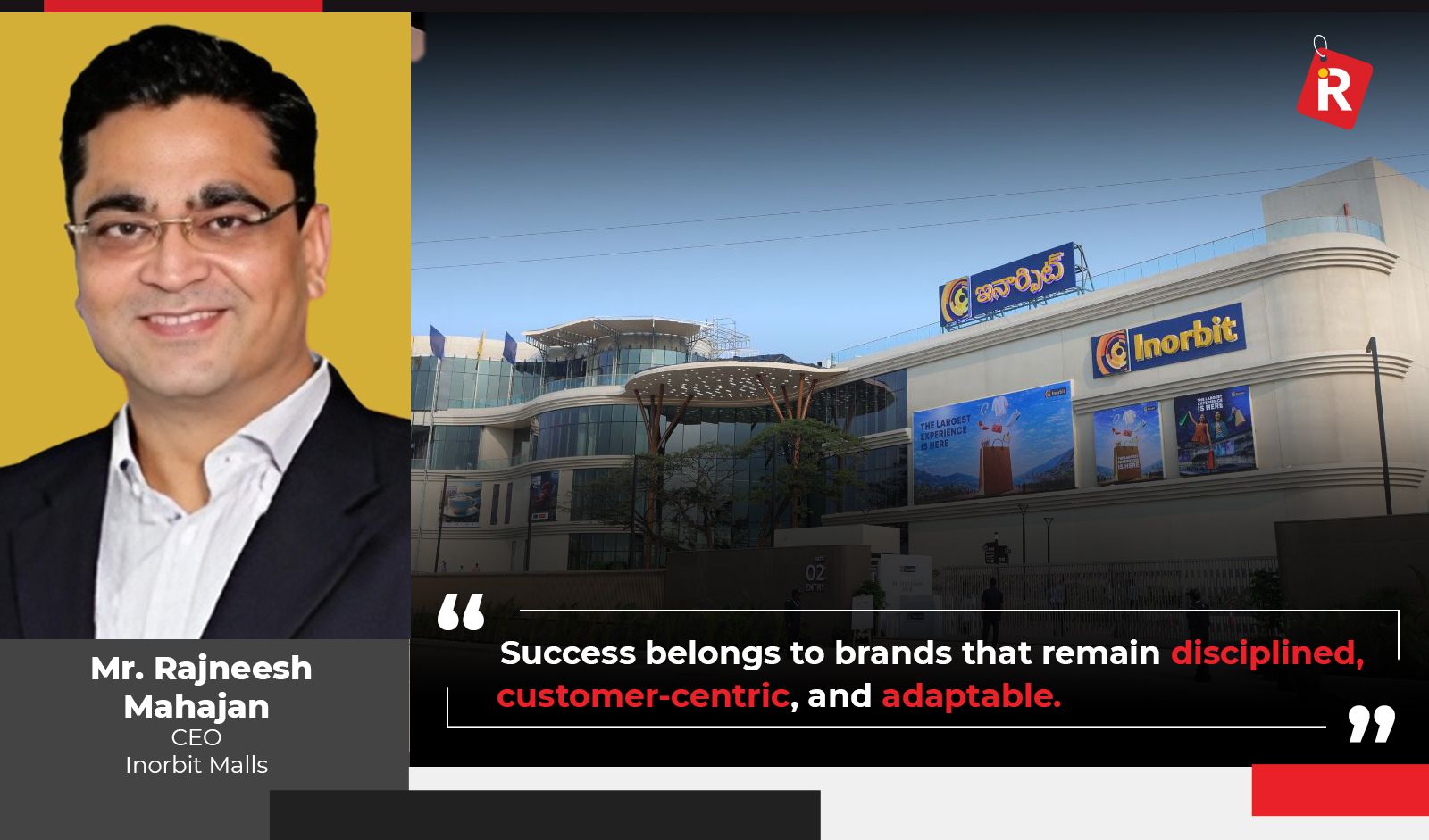
As consumer shopping habits continue to evolve, malls are adapting to meet changing expectations. No longer just shopping destinations, they are becoming spaces that combine retail, dining, entertainment, and experiences. Rajneesh Mahajan, CEO, Inorbit Malls, shares how omnichannel retail, digital-first brands, and changing consumer behavior are shaping the future of malls in India.
Changing Consumer Behavior
India's retail landscape has evolved significantly alongside the country's economic growth. Twenty-five years ago, the market was largely underserved, and products flew off the shelves because consumers had limited choices.
Over the past decade, categories matured, competition intensified, and consumers became more discerning. Retailers could no longer rely solely on demand and had to work harder to attract and retain shoppers.
Mall development also underwent a major transformation. Earlier, only a handful of malls exceeded one million square feet.
"Today, large-format malls have become much more common, offering consumers a broader mix of shopping, dining, and entertainment experiences," said Rajneesh Mahajan, CEO, Inorbit Malls.
Malls in the Age of Digital Commerce
When e-commerce first emerged, it was widely viewed as a direct competitor to brick-and-mortar retail. Today, that perception has changed dramatically.
Consumers now use different channels for different needs. They shop online, visit malls, purchase from physical stores, and increasingly rely on quick commerce platforms. As a result, retailers must adopt an omnichannel strategy in which each channel serves a distinct purpose while delivering a consistent brand experience.
"Managing multiple channels effectively has become one of the biggest challenges for retailers today," said Mahajan.
Allocating Real Estate to Diverse Brands
Today's malls no longer differentiate between traditional retailers, international brands, and D2C companies. According to Mahajan, leasing decisions are based on one key factor: consumer demand.
"If customers love the brand and it can generate strong sales, we are happy to allocate space. That's our core criterion," he said.
Several digital-first brands have successfully expanded into offline retail by investing in strong products, immersive store experiences, well-trained staff, and effective merchandising. Brands like Nykaa, Bluestone, and CaratLane have shown that D2C companies can perform just as well as traditional retailers when they execute physical retail effectively.
However, premium malls typically operate at occupancy levels above 97–98 percent, leaving limited space for new entrants. Mahajan believes many digital-first brands struggle not because quality retail space is unavailable, but because they expand offline before validating their business model.
In contrast, founders who focus on making their first store highly successful—consistently attracting customers and delivering strong sales productivity—are more likely to be approached by mall developers for expansion opportunities.
"No retailer has failed due to a lack of real estate—many have failed because they acquired too much real estate too soon," Mahajan noted.
Entry of Global Brands
Over the past decade, India has emerged as an attractive destination for international brands across multiple categories. Many global players have entered the market through partnerships with local retailers, opening stores in premium malls and high-street locations.
One of the key drivers behind this trend has been India's improving manufacturing capabilities. Investments under initiatives such as Make in India have strengthened production capacity, technology, and quality standards.
"Today, many Indian manufacturers can produce products that meet global quality standards, making licensing partnerships and local manufacturing far more feasible for international brands," said Mahajan.
At the same time, he pointed out that global recognition alone does not guarantee success in India. While hundreds of international brands have entered the country, many have also exited after failing to establish a sustainable business.
"India isn't a single market; it's a collection of multiple diverse markets. Consumer preferences, climate, purchasing behavior, and regional demand vary dramatically across cities. A strategy that works in Delhi may not work in Mumbai, Chennai, or Kolkata. Brands must develop micro-market strategies rather than relying on a single national approach," he explained.
Building a House of Brands
According to Mahajan, India's retail ecosystem requires scale, but expanding a single brand into smaller cities is often not commercially viable.
Managing a portfolio of complementary brands enables retailers to strengthen operations, logistics, marketing, and management capabilities within each market while creating operational efficiencies.
"While this creates additional negotiation complexities for mall developers, it is an effective strategy for retailers looking to expand sustainably," he said.
Malls as Experiential Shopping Destinations
Shopping today is about much more than purchasing products. It offers emotional satisfaction, social interaction, and memorable experiences.
While online shopping provides convenience, it cannot replicate the experience of walking through a well-designed mall, discovering new products, dining with friends and family, or enjoying a day out. "Malls have evolved into lifestyle destinations that combine retail, dining, entertainment, and community experiences under one roof," said Mahajan.
Succeeding in an Omnichannel Retail World
To succeed in today's retail environment, brands need strong products, competitive pricing, thoughtful placement across channels, and memorable customer experiences.
Equally important is recognizing that consumers interact differently with online platforms, physical stores, quick commerce, and malls. Retailers that tailor their strategies to each touchpoint while maintaining a consistent brand experience will be best positioned for long-term growth.
"Brands that stay disciplined, customer-centric, and adaptable will continue to thrive," Mahajan concluded.
As consumer shopping habits continue to evolve, malls are adapting to meet changing expectations. No longer just shopping destinations, they are becoming spaces that combine retail, dining, entertainment, and experiences. Rajneesh Mahajan, CEO, Inorbit Malls, shares how omnichannel retail, digital-first brands, and changing consumer behavior are shaping the future of malls in India.
Related Stories
As consumer shopping habits continue to evolve, malls are adapting to meet changing expectations. No longer just shopping destinations, they are becoming spaces that combine retail, dining,…
- By Richa Fulara
- |
- 8 Min Read
Growing health awareness, clean-label consumption, and the rise of omnichannel retail are reshaping India's organic food market. As the category gains mainstream traction, brands are expanding their…
- By Richa Fulara
- |
- 9 Min Read
With a portfolio of 10 brands spanning health, wellness, personal care, and lifestyle categories, BRND.ME has built a profitable $200 million business in just four-and-a-half years. Today, the…
- By Richa Fulara
- |
- 7 Min Read